The “Hannah Mouse” roller coaster

Today was one of those days with incredible highs and subsequent crashing down.

Our family was given an amazing, incredible gift today.  A local biopharmaceutical company had offered to create a “Hannah Mouse” for us, a genetically modified research mouse with Hannah’s unique DNA mutation.  This was HUGE!   The generosity of this company was so enormous, as creating a mouse like this is an expensive, complex, and time-consuming process (about a year or so).  

The VP that I had been working with was such a sweet man, and he contacted me multiple times to share different things he had be learning.  You could tell that he was really researching deep into this project. 

However, after hearing back from Dr. Weinreb (Hannah’s guardian angel) and talking to Dr. Sidransky at the NIH, this had been tried before by Dr. Grabowski (another leading GD23 expert) with not the results they were hoping for.  I have an email into Dr. Grabowski to have this explained in more detail in “mom terms”, but as Dr. Weinreb explained, creating the mouse model may not be easy or even possible. Even some so called mild human mutations are lethal in mouse models and that may be even more likely with a severe mutation like Hannah has.  Apparently, a “Hannah mouse” just is not possible.

Crash…

This would have been a huge boost in our fight for Hannah’s life, as it would give researchers a mouse model to test possible treatments against.  Now, we are back to square one — with this very accessible and forwarding pushing research tool in fighting disease closed to us…

Friggin’ sucks…
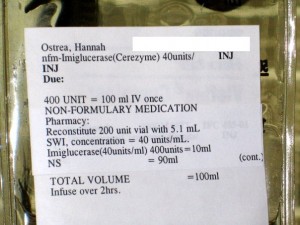
Three months down… (Cerezyme treatments)

Hannah's CerezymeCan you believe it has been three months since Hannah’s first Cerezyme treatment?!  

Hannah had her seventh IV infusion today, and she really handles it like a champ.  The only issue today was that we had to wait over TWO HOURS for the pharmacy to deliver the Cerezyme to the Infusion Center.  What a pain in the butt!

She also had very important bloodwork taken before her infusion after her IV was set.  These would test her Gaucher markers and CBC (platelet count!) to see if her enzyme replacement therapy has been helpful in her body (we already know it doesn’t cross the blood-brain barrier).  We should get the results of the platelets in a day or two, but we won’t see the results from the Gaucher markers for about a month.

I really, really, really, really hope we see some improvement in her markers.  This would mean there is purpose for the Cerezyme.  We honestly already feel that her spleen and liver have started to go down, but that is totally subjective, and I admit, a bit of wishful thinking.  But you know me, I’m a realist, and I really think it has helped some.

How a little bear named Hope made history today

Over the years, I have met some wonderful people online who have become an some of my closest friends.  Being able to meet them in person, even just once, has helped solidify friendships that have lasted almost a decade.
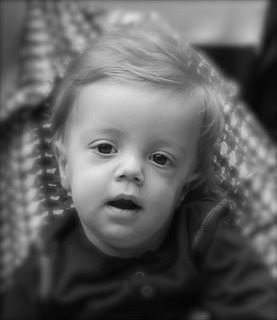
Throughout this journey with Hannah, I have also met some wonderful people.  Some who have become partners in our fight, some who have offered an ear and a hug, and some whom I admire not only their dedication to their own fights for their children but the willingness they are to open their hearts to me.

One such woman, Nicole, I was “introduced” online to back in December.  It was just a few weeks before her little boy, Greyson, passed away from Krabbes disease, another lysosomal storage disease (like Gaucher’s).  What is even more heartbreaking than the fact this gorgeous little boy wasn’t even given a chance to reach his first birthday was the fact that his death SHOULD have been prevented. 

Krabbes disease is one of those devastating disease that, if tested during the newborn screening process and found early, can be treated.  TREATED!  There is a treatment for this disease!  But here in Texas, Krabbes disease was not one of the 29 diseases they test for here. 

Greyson, a little boy who will save thousands of Texas babies

Greyson, a little boy who will save thousands of Texas babies

That is very close to changing.  Nicole and her family have worked incredibly hard these past four months championing a change in Texas law for the newborn screening process to include not only Krabbes disease but 40+ other diseases rather than the 20 or so they used to test for.  It passed the senate, and today, it passed the house committtee!

WHAT does this have to do with this cute little bear??

Today, I had the priviledge of meeting with Nicole, Greyson’s mom, today at our local mall.  We have been in support of each other’s journeys and fights since right before Grey passed away.  Ethan and Abigail had playdates, so it was just me and Hannah.   We met at Build-A-Bear, a favorite place of Nicole’s. 

She asked if it would be okay to for her to make a bear for Hannah.  Of course!  So, she took Hannah, and the two of them, along with Nicole’s good friend, looked around the store for the perfect bear.  They chose this really adorable collectible bear with a collectible pin.

Nicole named the bear “Hope,”  the bear she made for Hannah in honor and memory of her son Greyson.  She kept the collectible pin, as I told her that from now on, she and Hannah are now connected forever.  

And how did this little bear named “Hope” make history today?  Greyson’s law was one step closer to become a reality today, this afternoon after the House committee approved it.   Greyson’s legacy will not only live on in saving the lives of countless Texas children once this bill is written into law, but Greyson’s legacy also lives on in our fight to save Hannah’s life.  

It is almost as if little Greyson, thanks to his mom, is fighting for Hannah too.  And this little bear named “Hope” is our reminder that Hannah has little Greyson watching over her.


Novel Theory Explains Parkinson’s

http://psychcentral.com/news/2009/04/30/novel-theory-explains-parkinsons/5622.html

By Rick Nauert, Ph.D. Senior News Editor
Reviewed by John M. Grohol, Psy.D. on April 30, 2009

Novel Theory Explains Parkinson'sIn a study that reveals the clearest picture to date of neuron death in Parkinson’s disease, researchers at Columbia University Medical Center have found that a trio of culprits acting in concert is responsible for killing the brain cells.

The study, published in the journal Neuron, showed that three molecules – the neurotransmitter dopamine, a calcium channel, and a protein called alpha-synuclein – act together to kill the neurons.

The discovery gives researchers a new understanding of how to save the neurons, say the study’s authors, Eugene Mosharov, Ph.D., associate research scientist, and David Sulzer, Ph.D., professor of neurology & psychiatry at Columbia University Medical Center.

“Though the interactions among the three molecules are complex, the flip side is that we now see that there are many options available to rescue the cells,” says Dr. Mosharov.

The symptoms of Parkinson’s – including uncontrollable tremors and difficulty in moving arms and legs – are blamed on the loss of neurons from the substantia nigra region of the brain.

Researchers had previously suspected dopamine, alpha-synuclein and calcium channels were involved in killing the neurons, but could not pin the deaths on any single molecule.

The new paper, along with previous studies with Dr. Ana Maria Cuervo at Albert Einstein College of Medicine, shows that it is the combination of all three factors that kills the neurons.

The studies found that neurons die because calcium channels lead to an increase of dopamine inside the cell; excess dopamine then reacts with alpha-synuclein to form inactive complexes; and then the complexes gum up the cell’s ability to dispose of toxic waste that builds up in the cell over time. The waste eventually kills the cell.

The neurons will survive if just one of the three factors is missing, Drs. Sulzer and Mosharov also found. “It may be possible to save neurons and stop Parkinson’s disease by interfering with just one of the three factors,” Dr. Mosharov says.

That means that one drug already in clinical trials – which blocks the culprit calcium channel – may work to slow or stop the progression of the disease, an achievement none of the current treatments for Parkinson’s disease can accomplish.

Good Dopamine; Bad Dopamine

The idea that dopamine contributes to the death of neurons may seem paradoxical, since most Parkinson’s patients take L-DOPA to increase the amount of dopamine inside the cells.

The new study shows that it’s the location of the dopamine inside the neurons that determines its toxicity.

Most of dopamine inside the neurons is packaged into compartments that are shipped to the edge of the cell where the dopamine is released. The motor symptoms of Parkinson’s arise when the amount of dopamine released by the cells declines. L-DOPA improves symptoms by boosting the amount of dopamine released by the cells. As long as dopamine is confined inside the compartments before it is released, it is safe.

Outside the compartments in the cell’s cytoplasm, however, Drs. Sulzer and Mosharov found that dopamine – in concert with calcium and alpha-synuclein – is toxic.

New Idea for Treatment

A better treatment, the researchers say, may be to push more dopamine into the compartments where it has no toxic effect on the cell.

“That would be a magic treatment,” Dr. Mosharov says. “Not only would it stop cells from dying and the disease from progressing, it would improve the patient’s symptoms at the same time by giving their neurons more dopamine to release.”

Drs. Sulzer and Mosharov are currently working on genetic therapies that could accomplish this feat, but caution that it will be years before any such treatment is ready for clinical trials, if ever.

Source: Columbia University

Doing the “rolling over” happy dance!

Today is a HUGE day!  I wish I had pictures of it, although I do have a video of it downstairs, but you are going to have to wait because I am just too excited to share!

Nine months old, and guess what my little miss Hannah has mastered — ROLLING OVER back to stomach!  Yes, ladies and gentlemen, I am so proud to share that for the first time every, Hannah finally rolled back to front by herself without help!  Once she did it, she didn’t do it just once, not twice, but EIGHT different times.   (She had been doing stomach to back for a few months now)

It was almost like she found this newfound freedom by doing it!  The funniest thing today was watching her do three rolls on the carpet in our living room.  It takes so much effort for her to do it, you can hear it in her breathing.  On the last roll, she just laid there and didn’t move.  I waited about 60 seconds before checking on her because I figured she was just relaxing.  So I go up to check on her, and she was completely asleep!  Sound asleep in mid-roll.

This is huge, huge, HUGE!!  This is a delay we can wipe off the list!

Raptor Pharmaceuticals Receives Notices of Allowance for Two NeuroTrans(TM) Patent Applications

http://www.bio-medicine.org/medicine-technology-1/Raptor-Pharmaceuticals-Receives-Notices-of-Allowance-for-Two-NeuroTrans-28TM-29-Patent-Applications-4250-1/

Claims to Cover Therapeutic Delivery Across Blood-Brain Barrier


NOVATO, Calif., April 29 /PRNewswire-FirstCall/ — Raptor Pharmaceuticals Corp. (“Raptor” or the “Company”) (OTC Bulletin Board: RPTP) today announced that the United States Patent and Trademark Office (“USPTO”) has issued two Notices of Allowance for U.S. Patent Application Nos. 10/812,849 and 11/202,566, titled “Methods of increasing delivery of active agents to brain comprising administering receptor-associated protein (“RAP”) fragments conjugated to active agents.”


(Logo: http://www.newscom.com/cgi-bin/prnh/20071022/NYM074LOGO)


The newly allowed claims relate to Raptor’s NeuroTrans(TM) platform and generally cover the use of its proprietary RAP peptides in the delivery of diagnostic and therapeutic agents across the BBB into the central nervous system (“CNS”). The claims broadly encompass all neurological disorders, including Alzheimer’s Disease, Huntington’s Disease, Parkinson’s Disease, Multiple Sclerosis, and Amytrophic Lateral Sclerosis. We expect the official patents to issue in 2009, and if they do, will have a preliminary patent term that expires in 2023.


NeuroTrans(TM) has been designed to deliver drugs across the BBB in a minimally invasive way by conjugating them to RAP peptides engineered by Raptor. Hundreds of neurodegenerative disorders are ineffectively treated because most drugs are unable to penetrate the BBB and deliver a therapeutic effect. The development of effective brain targeting and delivery technologies, such as NeuroTrans(TM), has the potential to address the challenges involved in treating many of these CNS disorders.


Christopher M. Starr, Ph.D., Raptor’s Chief Executive Officer and Co-Founder, commented, “We are pleased that the USPTO has allowed pivotal claims that may offer strong

http://www.bio-medicine.org/medicine-technology-1/Raptor-Pharmaceuticals-Receives-Notices-of-Allowance-for-Two-NeuroTrans-28TM-29-Patent-Applications-4250-2/