How a little bear named Hope made history today

Over the years, I have met some wonderful people online who have become an some of my closest friends.  Being able to meet them in person, even just once, has helped solidify friendships that have lasted almost a decade.

Throughout this journey with Hannah, I have also met some wonderful people.  Some who have become partners in our fight, some who have offered an ear and a hug, and some whom I admire not only their dedication to their own fights for their children but the willingness they are to open their hearts to me.

One such woman, Nicole, I was “introduced” online to back in December.  It was just a few weeks before her little boy, Greyson, passed away from Krabbes disease, another lysosomal storage disease (like Gaucher’s).  What is even more heartbreaking than the fact this gorgeous little boy wasn’t even given a chance to reach his first birthday was the fact that his death SHOULD have been prevented. 

Krabbes disease is one of those devastating disease that, if tested during the newborn screening process and found early, can be treated.  TREATED!  There is a treatment for this disease!  But here in Texas, Krabbes disease was not one of the 29 diseases they test for here. 
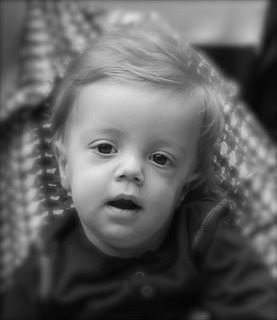
Greyson, a little boy who will save thousands of Texas babies

Greyson, a little boy who will save thousands of Texas babies

That is very close to changing.  Nicole and her family have worked incredibly hard these past four months championing a change in Texas law for the newborn screening process to include not only Krabbes disease but 40+ other diseases rather than the 20 or so they used to test for.  It passed the senate, and today, it passed the house committtee!

WHAT does this have to do with this cute little bear??

Today, I had the priviledge of meeting with Nicole, Greyson’s mom, today at our local mall.  We have been in support of each other’s journeys and fights since right before Grey passed away.  Ethan and Abigail had playdates, so it was just me and Hannah.   We met at Build-A-Bear, a favorite place of Nicole’s. 

She asked if it would be okay to for her to make a bear for Hannah.  Of course!  So, she took Hannah, and the two of them, along with Nicole’s good friend, looked around the store for the perfect bear.  They chose this really adorable collectible bear with a collectible pin.

Nicole named the bear “Hope,”  the bear she made for Hannah in honor and memory of her son Greyson.  She kept the collectible pin, as I told her that from now on, she and Hannah are now connected forever.  

And how did this little bear named “Hope” make history today?  Greyson’s law was one step closer to become a reality today, this afternoon after the House committee approved it.   Greyson’s legacy will not only live on in saving the lives of countless Texas children once this bill is written into law, but Greyson’s legacy also lives on in our fight to save Hannah’s life.  

It is almost as if little Greyson, thanks to his mom, is fighting for Hannah too.  And this little bear named “Hope” is our reminder that Hannah has little Greyson watching over her.


Doing the “rolling over” happy dance!

Today is a HUGE day!  I wish I had pictures of it, although I do have a video of it downstairs, but you are going to have to wait because I am just too excited to share!

Nine months old, and guess what my little miss Hannah has mastered — ROLLING OVER back to stomach!  Yes, ladies and gentlemen, I am so proud to share that for the first time every, Hannah finally rolled back to front by herself without help!  Once she did it, she didn’t do it just once, not twice, but EIGHT different times.   (She had been doing stomach to back for a few months now)

It was almost like she found this newfound freedom by doing it!  The funniest thing today was watching her do three rolls on the carpet in our living room.  It takes so much effort for her to do it, you can hear it in her breathing.  On the last roll, she just laid there and didn’t move.  I waited about 60 seconds before checking on her because I figured she was just relaxing.  So I go up to check on her, and she was completely asleep!  Sound asleep in mid-roll.

This is huge, huge, HUGE!!  This is a delay we can wipe off the list!

Texas CLASS, MDCP, and HCS programs

At the suggestion of Hannah’s developmental therapist, I called and got Hannah signed up for 3 Texas-based support programs.  The waiting list is incredibly long for these programs, but at least Hannah will be in the system. 

* CLASS (Community Living Assistance and Support Services):  Provides home and community-based services to adults and children with related conditions as a cost-effective alternative to ICF-MR/RC institutional placement. People with related conditions have a qualifying disability, other than mental retardation, which originated before age 22, that affects their ability to function in daily life.  Hannah’s place in the waitlist – #25,849 (approximately 12 years!)

* MDCP (Medically Dependent Children’s Program):  Provides services to support families caring for children and young adults who are medically dependent and to encourage de-institutionalization of children in nursing facilities.   Hannah’s place in the waitlist – #12×799 (approximately 9 years!)

* HCS (Home and Community Services):  Similar to MDCP, but more community based. 

The good thing about these programs now is that she will be in their system.  There will be other services that she will be or may be eligible for  that we could obtain much sooner (months rather than years) that would be very helpful, but we need to get “into the system” first!

Ocular Motor Apraxia and Supranuclear Palsy

We had Hannah’s NeuroOpthalmology appointment yesterday.  The appointment was at 11:45 am downtown.  Daddy showed up from work to wait with us because he wanted to hear what the doctor had to say.  At 12:45 pm, he had to go back to work.  We didn’t initially get to see the doctor until 1:30 pm!  I was getting so pissed.  Then, we saw her for about 3 minutes, and she had her nurse dilate Hannah’s eyes.  So, we had to wait ANOTHER 30 minutes, and we then saw the neuroopthalmologist for for another 5 minutes!  I felt like we were there all day! 

We didn’t learn anything new, but it was a good idea to get set up with a neuroopthalmologist on Hannah’s team beause we know how seriously the eyes can be affected by her disease.  She basically confirmed everything that Dr. Schiffmann, Hannah’s neurologist and GD expert, had diagnosed her with 3 months ago. 

Supranuclear gaze palsy and lack of saccadic eye movements, which she called by a new term.  But she did call it a new term.  Ocular Motor Apraxia.   I found this information on a Scottish medical site which helps explain it.  I posted bits of the article below.

Medical Information on Ocular Motor Apraxia
What we see is made in the brain from signals given to it by the eyes.
What we see is in fact made in the brain. The brain makes sight from signals given to it by the eyes.

What is Ocular Motor Apraxia?
‘Fast’ eye movements are called saccades. We use saccade eye movements to quickly change the direction that our eyes are looking. This helps us look at something that has suddenly moved near to us. This is so the eyes can focus sharply on an object. The eyes can then give clear signals to the brain to make clear vision. It also helps us quickly move our eyes across a page of writing while reading. Saccades are important in many other visual tasks. Ocular Motor Apraxia is a condition where a child has a breakdown (failure) in starting (initiating) fast eye movements.

How is Ocular Motor Apraxia diagnosed and how does it affect the way a child sees?
Ocular Motor Apraxia is often diagnosed by doctors asking parents questions about their child. Children often ‘thrust’ their head from side to side to change the direction they are looking. ‘Head Thrusts’ are a typical movement that helps a child overcome their difficulty in moving their eyes quickly. Children may also blink to start a fast eye movement. Parents will notice this. These children often tend to have difficulty reading. They may also dislike travelling in cars, as they will have difficulty seeing things passing by outside of the car.

During an examination of the child’s eye movements an eye doctor can confirm the diagnosis. Sometimes other tests are also done. This may be to see if there is a cause for the condition. Often no cause is found. This is called idiopathic.

Does ocular motor apraxia get better?
The lack of eye movement in ocular motor apraxia is first seen during the first few weeks of life. The movements of the head develop later. During this early stage the baby may wrongly be thought to have poor vision because moving targets can’t be followed by the eyes. Quick side to side head movements called head thrusts may then develop. Long term follow up has shown that these head movements decrease gradually over a number of years in many children.

How can parents, family, friends and teachers make a difference?
Ocular motor apraxia may develop on its own. It is however more commonly seen along with other conditions. These conditions might cause slowing of some aspects of development. As far as vision is concerned there are a number of things to think about.

We use our vision to get around, learn new things and to meet other people and make friends. Most children with Ocular Motor Apraxia have few problems getting around. The way they act can give the impression that their vision is normal. It is important however to be aware of their own special problems with vision.

It can be difficult for the child to choose to look in a particular direction. This means that the child may not look at you. This does not mean that the child is not paying attention.

The child may find it difficult to follow moving objects, especially when they are small. Television programmes with fast movement, such as cartoons, may not be seen easily, and the child may choose to watch programmes in which there is less movement, like panel games. Children with ocular motor apraxia may choose to get close to the television. This does not cause any harm.

Some things, which are moving quickly, may not be spotted because the ability to locate and follow moving targets is reduced. It is important to teach how to cross roads safely. Ball sports can also be difficult. When a child is old enough it is worth practicing throwing and catching.

A child who chooses to use head thrusts should not be made to stop doing this. They are trying to improve their vision and are often doing it without knowing it.

Difficulties at school may be due to some of the reading books being hard to see. This often means it takes longer and more effort to do the work. If the size of print is increased most children find schoolwork easier. They may also benefit from using a computer software programme while reading. The programme only shows one word of a sentence at a time. It is in the middle of the computer screen. This reduces the need for fast saccadic eye movements. It can increase reading speed and reduce tiredness.

Community Fundraising Ideas

I started going through all my emails from the past couple of days, and I came across one from another mom which had some great ideas on it.  These are some great community-based charity fundraising suggestions.  She gave me permission to share it with all of you. 

Some of these look like a lot of fun, and I can see them being done here!  (We had put our big fall fundraiser on hold, but this could kickstart it!).  If you have any more ideas to share, please add them here, and I’ll add them to the list!

* community walk
* golf tournament or minature golf tournament
* carnival/faire with local companies who want to promote to families
* special “night” with local high school sports event,
* “game show” night which is like a theatre performance with locals as participants with prizes
* Local teams or running groups to take on child as other non-illness related events (ex:  “we are running for child’s-name at URL.com”)
* Local school calendar/neighborhood calendar (candids are good) to sell
* comedy night with local comedians
* concert with local musicians
* Community book sale/flea market with all proceeds going to child (can be online as well)
* Talk to local corporations about taking on child as their “inhouse” charity for the period
* Parent/child community dance/evening at local rec center
* Child Art Show with luncheon
* Sports tournament with local children/families
* Community-wide scavenger hunt with local businesses to donate to draw customers in plus participants pay an entry fee
 
* silent auction/raffle with any of these
* Tshirt sales with any of these
* Bracelet sales with any of these
* Food sales with many of these
 
* Talk to local school booster clubs for ideas
* Talk to local churches for ideas

Feeling defeated

I don’t know what is wrong with me.   I’m feeling very defeated and am worried tremendously about Hannah, specifically losing her.   I have no idea what set it off either.  

Today was a positive day.  Had a great, great conversation with two of the directors of the National Gaucher Foundation PLUS finding out they gave us a full-page share in their quarterly newsletter (click here, page 17).  Made some wonderful connections in the Tay-Sachs community.  Got a positive response from someone I was hoping, hoping would be able to help me understand what research is going on even though she is incredibly busy.  Found a couple GD2 and GD3 parents who are very willing to get more involved and “fight” with me.  Gosh, even more positive responses to emails I have sent out…many people willing to share their expertise to help me understand.

I just got this overwhelming feeling today that it may not be enough.  That no matter what I do, I’m not going to be able to save her, and I am going to lose her.  I haven’t felt like this in a long time, but I just feel like everything that is out there is just not going to be ready in time for Hannah.  That the treatment or cure will come after it is too late for us, for our family, for our little girl.  That because of our personal financial crisis as well as this so-called “recession,” there won’t be enough money to give Hannah everything she needs to keep fighting (especially if we have to come up with out-of-pocket money for additional therapy services) or money to give researchers who are working specifically on GD2 and GD3 research and treatments.

I watched Chuck tonight, and there was a scene where Chuck’s sister was getting married and being walked down the aisle with Chuck and their dad.  All I could think about was Hannah possibly never getting a chance to get married and have Daddy walk her down the aisle.  Would she even be here for her sister’s wedding or her brother’s?  

I watched that episode with Hannah cradled in my arms, asleep.  I just kept stroking her hair, giving her kisses on the top of her head.  I kept telling her that I love her.  I gave myself until the end of the episode before putting her into her bed.  I don’t know what came over me today (through tonight), but I don’t want to let her go. 

Tomorrow we have her NeuroOpthalmology appointment to see how much damage her Gaucher’s Disease has actually done to her eyes.  Another reality check.  Finding out the damage that will never be able to be repaired.  Finding out her limitations as of today and understand what limitations she may have in the future.

I don’t want to ask “Why Hannah?”   I don’t want to hear that “God has a plan.”  I just wish that she could just be a normal baby girl, and we could live a normal life.